Give Your Old Lamps New Life – Use Them as Grow Lights


Give Your Old Lamps New Life – Use Them as Grow Lights
Old lamps don’t have to gather dust in the attic or end up in the trash. With a little creativity, they can take on a new purpose—as grow lights for your houseplants. Many indoor plants benefit from extra light during the darker months, and by reusing lamps you already own, you can save money and reduce waste. Here’s how to turn your old lamps into functional and stylish grow lights.
Why Plants Need Extra Light
Plants rely on light for photosynthesis—the process that turns light energy into food. During winter or in homes with limited natural light, many houseplants don’t get enough sunlight, especially if they’re placed far from windows. This can cause slow growth, pale leaves, or leaf drop.
Grow lights can make up for the lack of sunlight, helping your plants stay healthy and vibrant year-round. And you don’t necessarily need expensive specialty fixtures—often, a lamp you already have will do the job perfectly with the right bulb.
Choose the Right Bulb
When repurposing a lamp as a grow light, the most important step is choosing a bulb that provides the right kind of light. Plants thrive under light that includes both blue and red wavelengths, but for most home setups, a full-spectrum LED bulb with a color temperature between 4000 and 6500 Kelvin works beautifully. This produces a bright, neutral white light that’s pleasant for both plants and people.
LED bulbs are energy-efficient and produce very little heat, making them ideal for lamps placed close to plants. Avoid incandescent or halogen bulbs—they get too hot and can scorch leaves.
Læs også:

How to Adapt Your Lamp
Most lamps can be turned into grow lights with just a few adjustments:
- Check the socket and wattage limit. Make sure your lamp can handle the bulb you plan to use.
- Aim the light at your plants. Adjustable arms or flexible mounts make it easy to direct the light where it’s needed.
- Mind the distance. Keep the lamp about 8–16 inches above your plants, depending on the bulb’s brightness. Too close can cause leaf burn; too far reduces effectiveness.
- Use a timer. Plants need a consistent day-night rhythm. About 10–12 hours of light per day is ideal. A simple plug-in timer can automate the schedule.
Desk lamps, pendant lights, or wall-mounted fixtures can all work well—it’s all about placement and bulb choice.
Make It Part of Your Décor
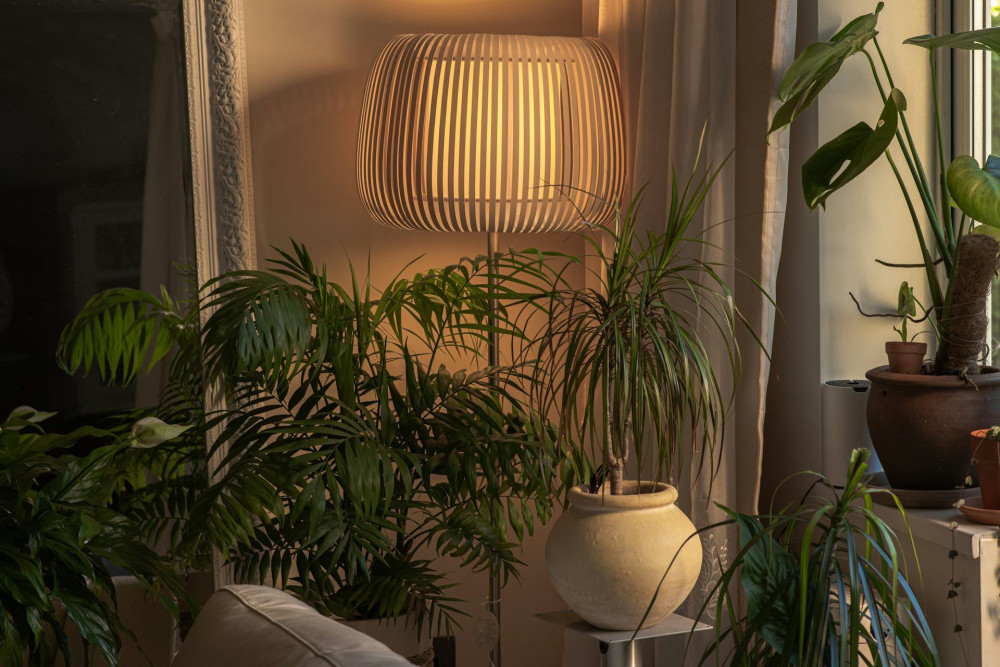
Grow lighting doesn’t have to look like lab equipment. In fact, it can become a beautiful part of your home décor. A vintage brass lamp can add warmth and charm, while an old industrial work light fits perfectly in a modern, plant-filled corner.
You can also refresh the lamp’s look—paint it a new color, replace the cord with a fabric-covered one, or group several lamps together to create a cozy “light garden.” The result is both functional and decorative.
A Sustainable Choice
Repurposing old lamps as grow lights isn’t just practical—it’s sustainable. You avoid buying new products, reduce waste, and make use of what you already have. Meanwhile, your plants get the light they need to thrive, and your home feels greener and more alive.
Small changes like this show that sustainability doesn’t have to be complicated. It’s about seeing new potential in old things—and giving them a second life.
Læs også: