Create Depth in the Bedroom with Different Textures

Create Depth in the Bedroom with Different Textures
A bedroom should be a place of calm, but also a space that feels warm and personal. One of the most effective ways to add character and depth is through texture. When you mix materials—soft, rough, smooth, and matte—you create a sensory balance that makes the room feel layered and inviting. Here’s how to use texture to give your bedroom dimension and personality.
Why Texture Matters
Texture influences how we experience a room—both visually and through touch. A space filled with sleek, uniform surfaces can feel flat and cold, while a mix of materials adds warmth and interest. In the bedroom, where comfort and relaxation are key, texture helps create a sense of coziness and balance.
It’s not just about how materials look, but how they feel. A chunky knit throw, linen sheets, or a reclaimed wood floor can all contribute to a more tactile, comforting atmosphere.
Start with Textiles
Textiles are the easiest place to begin when layering texture. They take up a lot of visual space and can be swapped out or combined in new ways with little effort.
- Bedding in natural fabrics like cotton, linen, or bamboo feels breathable and luxurious. Linen’s slightly crinkled surface adds a relaxed vibe, while cotton sateen offers a smooth, polished finish.
- Throws and blankets in wool, knit, or fleece bring softness and warmth. Layer them at the foot of the bed or over a chair for a cozy, lived-in look.
- Curtains and pillows can introduce contrast. Heavy velvet drapes create a sense of luxury and help block light, while sheer cotton or linen curtains keep things airy and bright.
Sticking to a cohesive color palette while mixing textures keeps the look calm but still visually engaging.
Mix Hard and Soft Materials
A well-balanced bedroom combines both hard and soft elements. Wood, metal, and stone add structure and contrast, while fabrics and upholstered pieces soften the overall feel.
- Wood brings warmth and a natural touch. A walnut nightstand or oak bed frame can ground the space.
- Metal—in lamps, drawer pulls, or bed legs—adds a modern edge and a bit of shine.
- Stone and ceramics in accessories like vases, candleholders, or trays introduce weight and a sense of calm.
When mixing materials, think about how they interact. A rough wood floor can look stunning next to a smooth painted wall or a fabric headboard.
Play with Walls and Floors
Your walls and floors set the stage for everything else, and they’re great opportunities to add texture. A limewash or matte paint finish gives subtle depth, while textured wallpaper can make even a neutral room feel layered. If you’re feeling bold, try a darker accent wall to create a cocoon-like atmosphere.
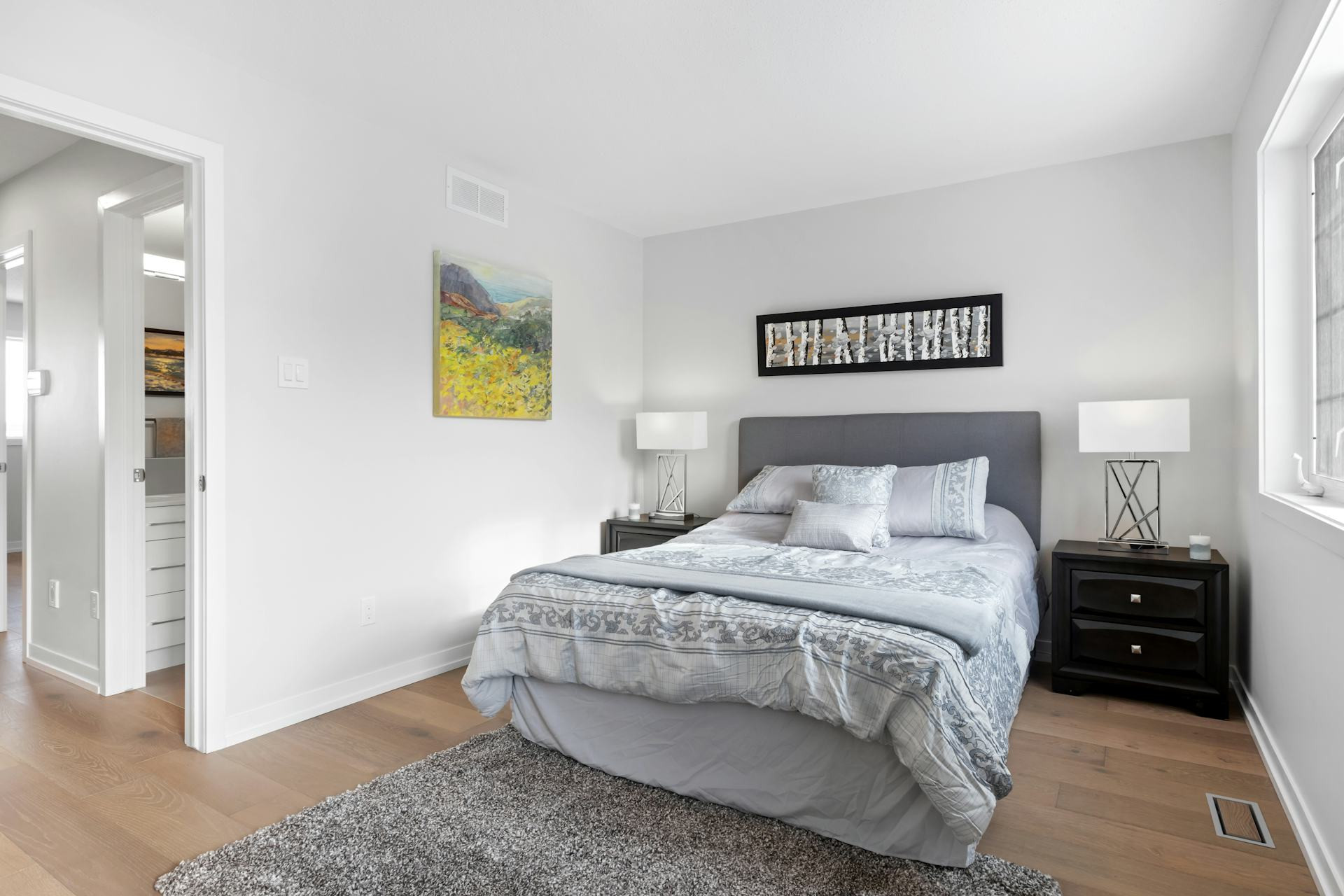
On the floor, a rug can make a huge difference. A plush wool rug under the bed or a smaller woven rug by the nightstand adds both comfort and visual warmth. Choose a rug with a distinct weave or pile to break up smooth surfaces.
Use Lighting to Highlight Texture
Lighting plays a key role in emphasizing texture. Soft, warm light brings out the richness of materials, while harsh light can flatten them. Use multiple light sources—overhead fixtures, bedside lamps, and accent lighting—to create depth and flexibility.
A lamp that casts gentle shadows across a textured wall or quilted bedspread can make the room feel more dynamic and intimate.
Find Balance and Add Personality
When layering textures, balance is everything. Too many competing materials can feel chaotic, while too few can make the space dull. Choose three or four main materials—like wood, linen, metal, and wool—and repeat them in different ways throughout the room.
Add personal touches to make the space your own. A leafy plant introduces organic texture and freshness, while artwork or a woven wall hanging can tie colors and materials together beautifully.
A Bedroom with Soul
A bedroom rich in texture doesn’t just look beautiful—it feels alive. It invites you to slow down, unwind, and connect with your surroundings. By combining materials that appeal to both the eye and the touch, you can create a space that feels uniquely yours—a true retreat for rest and renewal.