Create a Calm Kids’ Room with Natural Materials

Create a Calm Kids’ Room with Natural Materials
A child’s room should be a place for play, rest, and comfort. But in a world full of bright colors, screens, and noise, creating a space that feels both stimulating and soothing can be a challenge. One of the most effective ways to achieve that balance is by decorating with natural materials. Wood, cotton, wool, and linen not only bring warmth and harmony to a room—they also support a healthier indoor environment and a more grounded atmosphere.
Why Natural Materials Make a Difference
Natural materials have a calming effect because they engage our senses in a gentle, balanced way. The texture of wood feels warm and alive, cotton and wool offer softness and comfort, and nature-inspired colors—beige, green, brown, and gray—help create a sense of peace for both children and adults.
Many natural materials are also breathable and free from harsh chemicals, which can improve air quality and reduce the risk of allergies. For kids who spend hours in their rooms playing, reading, or sleeping, this can make a real difference in their well-being and sleep quality.
Start with the Big Surfaces
When designing a child’s room, begin with the elements that take up the most space—walls, floors, and furniture. These set the tone for the entire room.
- Walls: Choose low-VOC or zero-VOC paint in soft, natural shades. You can also consider wallpaper made from paper or plant-based fibers for a tactile, eco-friendly option.
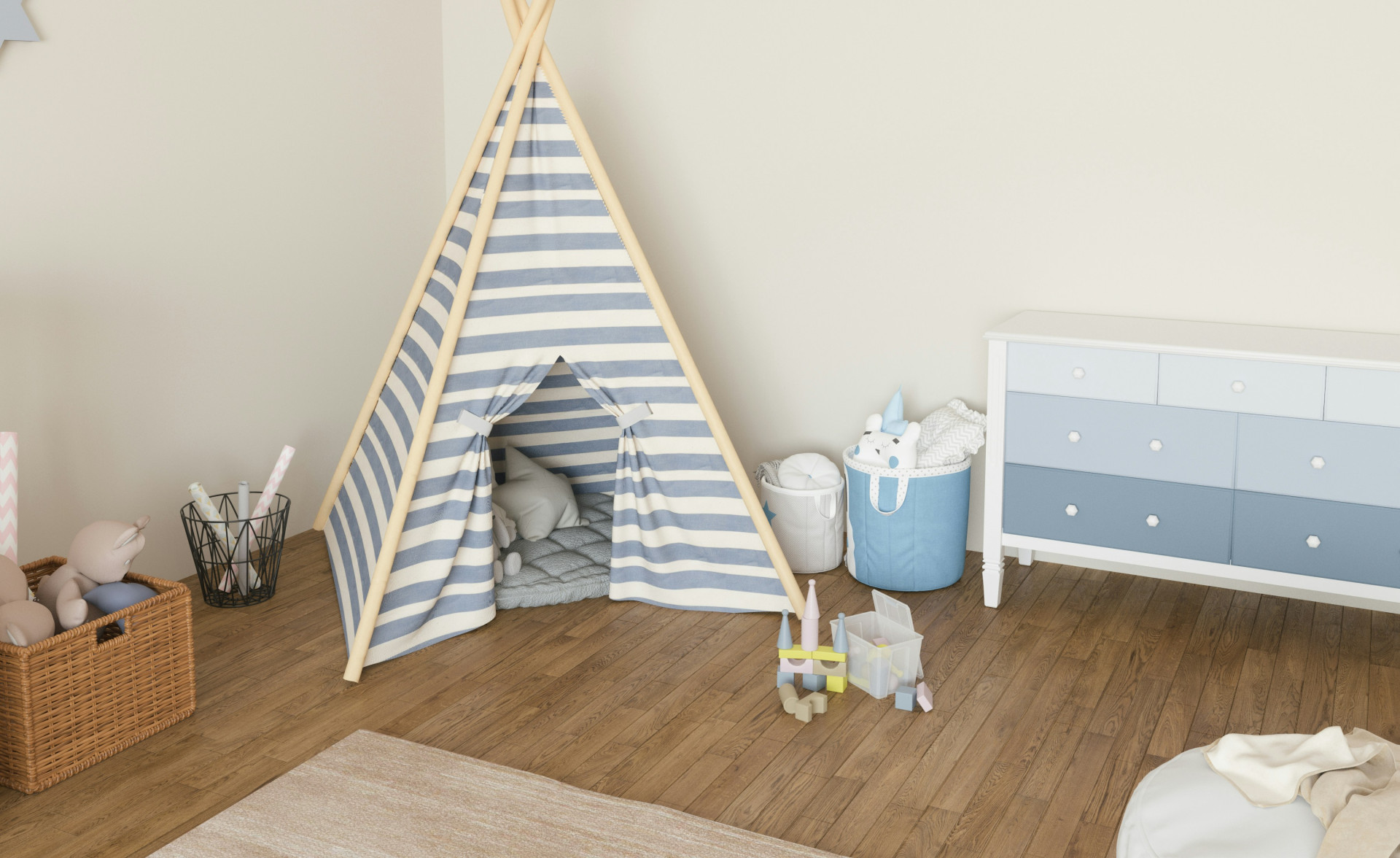
- Floors: Hardwood or cork floors provide a warm, comfortable surface for play. If you prefer carpet, go for wool or cotton instead of synthetic fibers.
- Furniture: Solid wood furniture—like oak, maple, or pine—offers durability and timeless appeal. Avoid overly glossy finishes; a natural surface brings more life and texture to the space.
Add Warmth with Textiles and Details
Textiles play a big role in creating a cozy, inviting atmosphere. Curtains, bedding, pillows, and rugs made from natural fibers can make the room feel both comfortable and functional.
- Bedding and pillows: Opt for organic cotton or linen, which feel soft against the skin and are easy to wash.
- Rugs: A wool rug adds warmth and helps absorb sound, making the room quieter and more peaceful.
- Curtains: Light linen or cotton curtains filter sunlight beautifully and give the room a gentle, natural glow.
Small details like woven baskets, wooden storage boxes, or cotton fabric bins help keep things organized while maintaining a cohesive, natural look.
Nature-Inspired Colors
Color has a powerful impact on mood and energy. In a child’s room, it’s all about finding the right balance between playful and calming. Nature’s palette is a great starting point: green evokes forests and calm, blue recalls the sky and water, and earthy tones bring warmth and security.
You can still add pops of color through toys, artwork, or throw pillows—these accents keep the space fun and personal without overwhelming the senses.
Bring Nature Indoors
Plants are an easy way to introduce nature into a child’s room. They purify the air and add a sense of life and growth. Choose hardy, low-maintenance varieties like spider plants, peace lilies, or succulents. If your child is old enough, caring for a plant can be a fun and nurturing activity.
You can also bring nature inside in other ways—display shells, stones, or branches collected on family walks. These small treasures add a personal, sensory touch to the room.
A Room That Grows with Your Child
One of the best things about decorating with natural materials is their longevity. They age beautifully and adapt as your child grows. A solid wood desk can serve from early art projects to high school homework, and a wool blanket can remain a comforting favorite for years.
By choosing timeless materials and a calm color palette, you create a space that evolves with your child—without needing a full redesign every few years.
Calm, Play, and Connection
A child’s room doesn’t need to look like a showroom—it should feel like home. Decorating with natural materials isn’t just about style; it’s about creating an environment that supports calm, creativity, and connection. In a space that feels safe and balanced, children can rest, play, and grow with ease.