Combine Gloss Levels for More Depth and Dimension in Your Space

Combine Gloss Levels for More Depth and Dimension in Your Space
When you’re painting a room, it’s not just the color that matters. The gloss level — how shiny or matte the paint is — plays a big role in how light moves through the space and how the color appears. By mixing different gloss levels, you can create depth, contrast, and a more dynamic look without changing your color palette. Here’s how to use gloss as a creative design tool in your home.
What Does Gloss Level Mean?
Gloss level refers to how much light a painted surface reflects. A low-gloss (matte) finish absorbs more light and feels soft and subtle, while a high-gloss finish reflects light and highlights details and textures.
- Flat or matte (gloss 0–10): Offers a smooth, elegant, and modern look. Ideal for living rooms, bedrooms, and ceilings where you want a calm, non-reflective surface.
- Eggshell to semi-gloss (gloss 20–50): More durable and easier to clean. Great for hallways, kitchens, and kids’ rooms.
- High-gloss (gloss 60+): Creates a striking, almost mirror-like effect. Often used on trim, doors, and cabinetry to add contrast and depth.
Combining these finishes can make a room feel both cohesive and visually interesting.
Create Contrast with Light and Shadow
When you use different gloss levels in the same color, subtle variations appear as the light changes throughout the day. This creates a sense of movement and texture without introducing new colors.
Try painting your walls in a matte finish and the ceiling in a slightly higher gloss. This can make the room feel taller and more open. Or use a glossy finish on trim and doors to contrast with matte walls — it highlights architectural details and adds polish to the space.
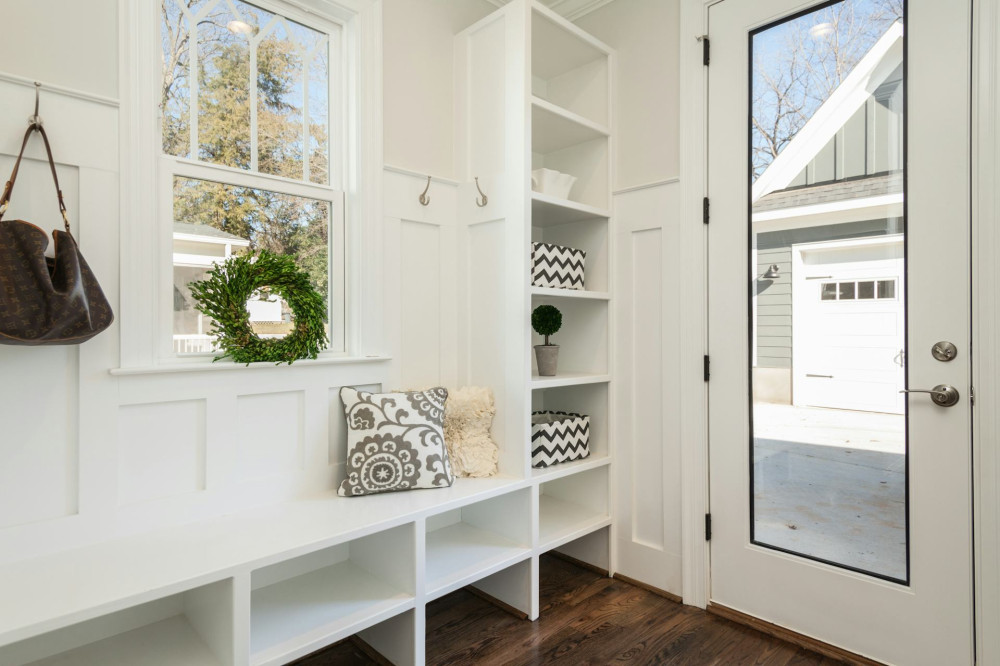
Another idea is to divide a wall into two sections: matte on top and semi-gloss on the bottom. It’s a practical choice (easier to clean lower walls) and adds a refined, layered look.
Tone-on-Tone with Different Gloss Levels
If you prefer a calm, monochromatic palette but still want visual interest, use the same color in multiple gloss levels. This approach gives a sophisticated, modern feel as light interacts differently with each surface.
For example, a deep green wall in matte paint paired with a door in the same color but high gloss creates a subtle yet striking effect. The door will catch the light and stand out, while the wall remains soft and understated. It’s an easy way to add depth and character, especially in rooms with limited natural light.
Practical Considerations
Before you start, think about the room’s function and lighting. In spaces with lots of natural light, high-gloss finishes can sometimes feel too reflective. In darker rooms, however, they can help bounce light around and make the space feel brighter.
Keep in mind that glossy paint highlights imperfections more than matte paint. Make sure surfaces are smooth and well-prepared before applying a high-gloss finish.
How to Combine Gloss Levels in Practice
- Walls and ceiling: Matte on walls, eggshell or satin on the ceiling for a balanced, airy look.
- Trim and doors: Semi-gloss or high-gloss for durability and contrast.
- Kitchens and bathrooms: Semi-gloss for easy cleaning, paired with matte or eggshell walls for a softer balance.
- Accent details: Use glossy paint to create subtle patterns or panels over a matte base for a refined, graphic effect.
You don’t need a major renovation to make a big impact — sometimes, simply varying the gloss level is enough to transform a space.
A Room with More Character
Combining gloss levels is all about playing with light and atmosphere. It allows you to highlight architecture, create calm or energy, and bring personality into your home. With just a few thoughtful choices, you can turn a flat, uniform room into one that feels layered, lively, and uniquely yours.
So next time you pick up a paintbrush, don’t just think about color — think about how gloss can add depth and dimension to your space.