Colors and Focus – How They Affect Your Office Environment

Colors and Focus – How They Affect Your Office Environment
Colors are more than decoration – they influence our mood, energy, and ability to concentrate. In an office where many Americans spend most of their day, the right color choices can make a real difference in both well-being and productivity. But how do you find the right balance between inspiring and calming? Here’s a look at how colors affect us and how you can use them intentionally in your workspace.
The Psychology of Color – More Than Personal Taste
Research in color psychology shows that colors can shape our emotions and behavior. Some shades stimulate the brain and boost energy, while others calm the mind and support focus.
- Blue is often associated with calm, stability, and clarity. It’s a popular choice for offices because it helps create a sense of order and focus.
- Green represents balance and nature. It can reduce stress and give your eyes a break – especially helpful if you spend hours in front of a screen.
- Yellow is energetic and uplifting. It can spark creativity, but too much yellow can feel overwhelming, so use it as an accent.
- Red increases energy and a sense of urgency. It’s best used sparingly, as large areas of red can feel stressful.
- Gray and neutral tones create a professional look but can feel dull if not balanced with warmer or more vibrant colors.
Understanding how colors work isn’t just theory – it’s about how they feel in your specific space.
Use Color to Define Zones
Modern offices often include different zones: areas for focus, collaboration, and relaxation. Color can help define these spaces and support their purpose.
- Focus zones: Cool, muted tones like blue or sage green promote calm and concentration.
- Creative areas: Add energy with accents of yellow, orange, or coral to encourage brainstorming and innovation.
- Break rooms and lounges: Choose warm, welcoming colors like soft green, beige, or terracotta to create a relaxed atmosphere.
By using color strategically, you can create a natural rhythm in your office where employees intuitively sense the difference between work and rest areas.
Light and Materials Matter
Colors look different depending on lighting and surface texture. A blue wall in a dim corner can feel cold, while the same color in natural light feels fresh and airy. Always test colors in the actual space before making a final decision.
Materials also play a role. Matte finishes create a softer look, while glossy surfaces reflect more light and intensity. Natural materials like wood, wool, or linen can tone down strong colors and add warmth. The combination of color, light, and texture determines how a room feels day to day.
The Home Office – Finding Your Personal Balance
Working from home gives you more freedom to design a space that fits your rhythm. Color can help you separate work from leisure, even in a small area.
A home office in blue-green tones can help you stay focused, while warmer accents – perhaps in artwork or textiles – make the space feel more personal and comfortable. If your workspace shares a room with other activities, use color to visually define your work zone so it’s easier to “switch off” when the day is done.
Small Changes, Big Impact
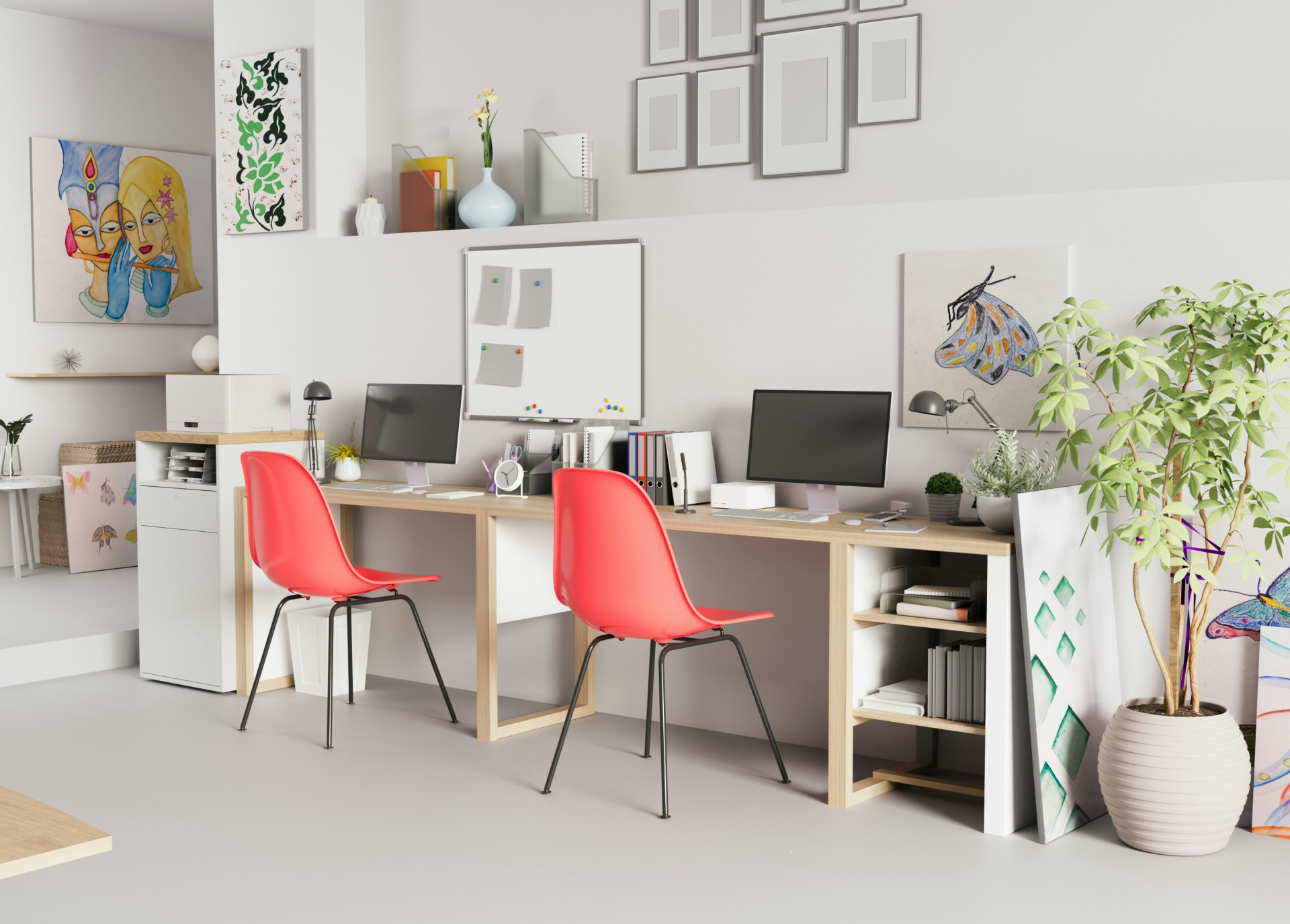
You don’t need to repaint the entire office to feel a difference. Small color elements can go a long way: a colorful bulletin board, plants, throw pillows, or wall art. The goal is to create balance between stimulation and calm.
A good approach is to start with a neutral base and add a few accent colors that support the room’s function. This makes it easy to adjust the look over time without a major renovation.
Color as Part of Workplace Culture
Color affects not only individuals but also team dynamics. A bright, well-thought-out color scheme can signal openness, creativity, and energy – values that influence collaboration. When employees feel comfortable in their surroundings, motivation and productivity naturally increase.
Working with color isn’t just about design; it’s about creating an environment that supports both well-being and performance. A balanced color palette can be a quiet but powerful ally in your everyday work life.